How to Spot Storm Hail Damage Before It Becomes a Leak
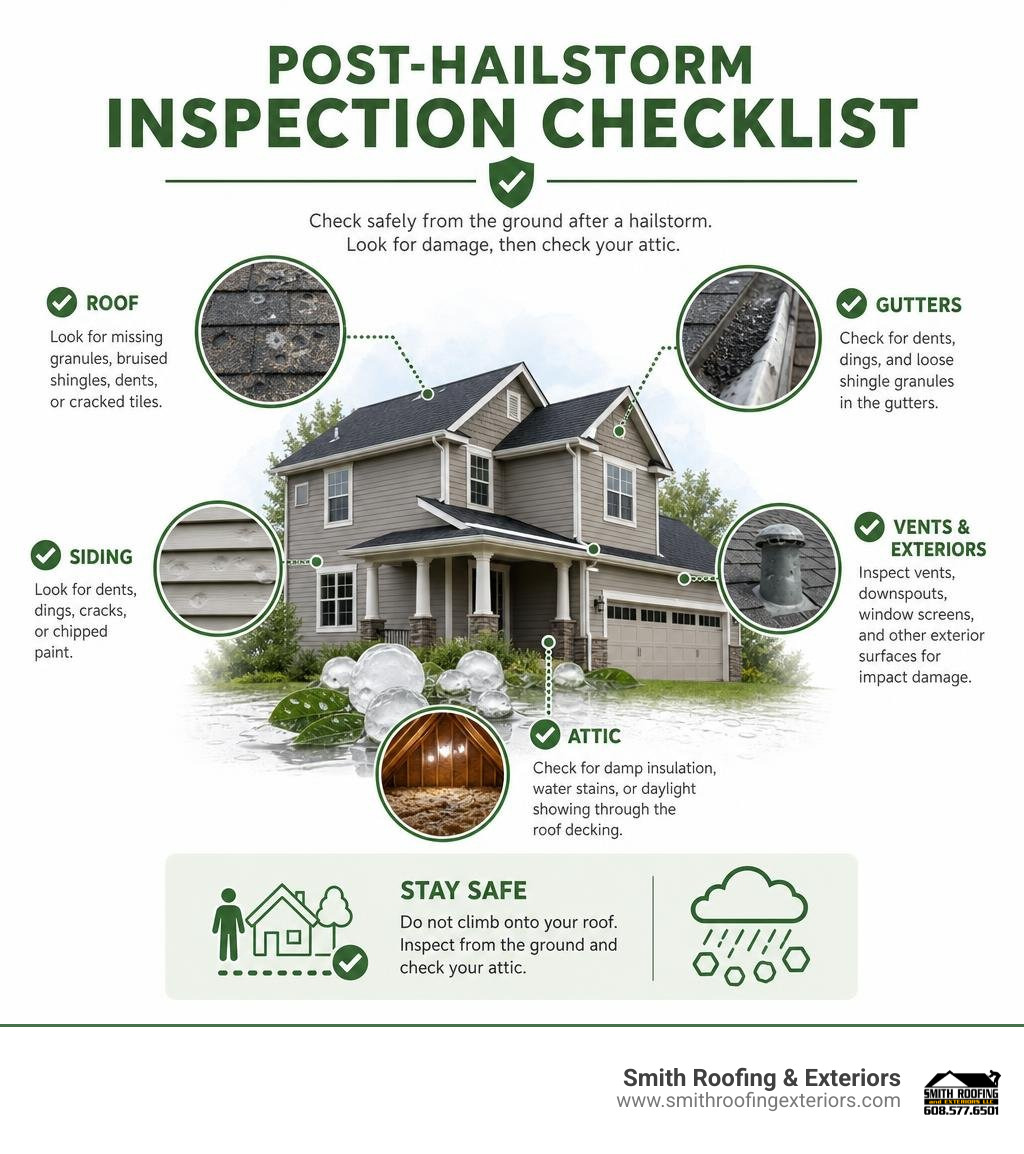
After a hailstorm, do not climb onto your roof. Instead, check safely from the ground for fresh dents in gutters, downspouts, vents, siding, window screens, and vehicles. Look in gutters for loose shingle granules, then check your attic for damp insulation, water stains, or daylight showing through the roof decking.
Storm hail damage is not always obvious. Even quarter-sized hail can harm older or weathered shingles, while larger hail can bruise the shingle mat, knock off protective granules, crack tiles, dent metal, and damage gutters. A roof may look fine from the driveway but still have impact marks that shorten its life and can lead to leaks later.
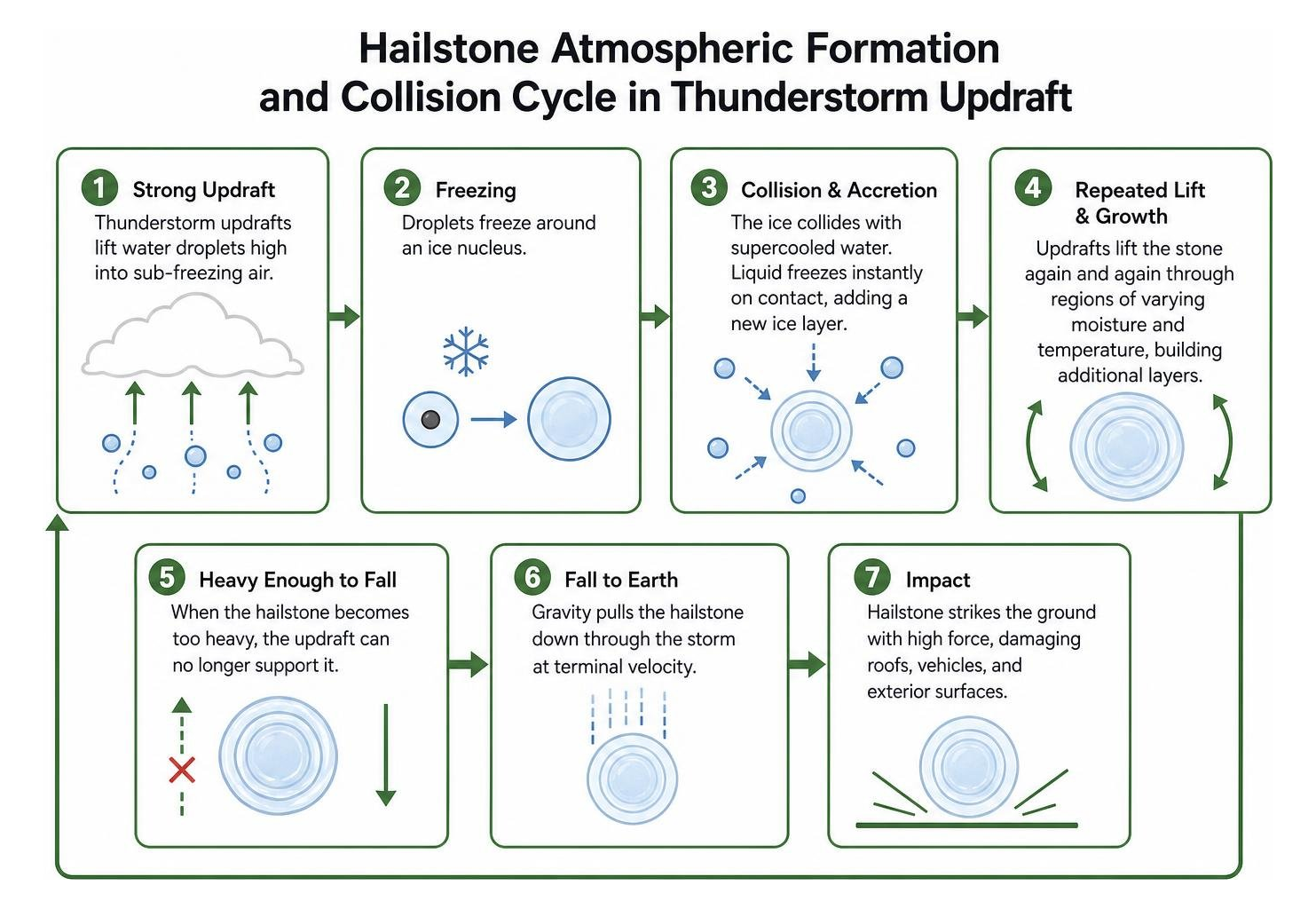
Hail forms high inside powerful thunderstorms, where updrafts lift water droplets into freezing air. The stones grow as layers of ice build up, then fall with enough force to damage roofs, cars, and exterior surfaces. In Wisconsin, wind can also drive hail sideways, increasing damage to siding, windows, and roof edges.
I’m Matt Smith, owner of Smith Roofing & Exteriors. I help homeowners understand storm hail damage and make informed choices about roof maintenance, repairs, and replacement before small impacts turn into costly problems.
Know your storm hail damage terms:
The Science of Hail: Formation, Sizing, and Impact Velocity
To understand how hail batters your exterior, it helps to understand what happens inside a severe cumulonimbus cloud. Hailstones are produced in strong convective updrafts. When a thunderstorm develops, powerful vertical air currents lift liquid water droplets high into sub-freezing atmospheric layers.
As these droplets freeze, they encounter supercooled water—liquid water suspended at temperatures below 32°F. This liquid freezes instantly onto the ice nucleus upon collision. The stone continues collecting mass as it moves horizontally and vertically through regions of fluctuating moisture and temperature. Once the hailstone grows too heavy for the storm’s updraft to support, gravity pulls it toward Earth at terminal velocity.
Hail vs. Sleet vs. Graupel: Key Differences
Homeowners often confuse various cold-weather precipitation types, but their physical structures and potential for property destruction are vastly different:
- Hail: Hard, solid spheres or irregular lumps of layered ice formed within severe convective thunderstorm updrafts. Hail occurs during warm-season severe storms and possesses high density and mass, enabling it to inflict severe structural damage.
- Sleet (Ice Pellets): Small, translucent balls of ice that form in winter when falling snowflakes pass through a warm atmospheric layer, melt into raindrops, and then refreeze into solid ice pellets before reaching the ground. Sleet bounces and rarely causes structural damage.
- Graupel (Soft Hail): Snow crystals that collide with supercooled water droplets, creating a soft, opaque, white coating (rime). Graupel is fragile, crushes easily between your fingers, and poses no structural threat to roofs or siding.
Hailstone Sizing, Velocity, and Damage Thresholds
The severity of exterior property damage depends directly on the hailstone’s diameter, density, mass, and terminal fall speed. Severe storms documented in National Weather Service storm reports show that high-velocity winds amplify kinetic energy, turning stones into destructive airborne projectiles.
| Hail Diameter | Reference Object | Expected Fall Velocity | Structural Damage Threshold |
|---|---|---|---|
| 0.75 in (1.9 cm) | Penny | 15 – 25 mph | Minimal structural risk; strips foliage and weakens aged sealants. |
| 1.00 in (2.5 cm) | Quarter | 25 – 40 mph | Severe weather threshold; dislodges granules, dents soft metals, bruises weathered shingles. |
| 1.75 in (4.4 cm) | Golf Ball | 40 – 50 mph | Cracks asphalt shingle mats, breaks vinyl siding, cracks skylights. |
| 2.75 in (7.0 cm) | Baseball | 50 – 72 mph | Punctures roof decking, shatters automotive windshields, splits tile. |
| 4.00+ in (10.0+ cm) | Softball / Grapefruit | 75 – 100+ mph | Catastrophic structural penetration, compromises commercial flat membranes, destroys rafters. |
The economic destruction of these events is staggering. Recent historical events like the April 2026 Springfield hailstorm property losses surpassed $314 million in damages. Nationally, the Insurance Institute for Business & Home Safety (IBHS) noted that hailstorms generated $46 billion in property, auto, and crop destruction in 2023 alone.
Recognizing the Signs of Storm Hail Damage on Different Roof Types
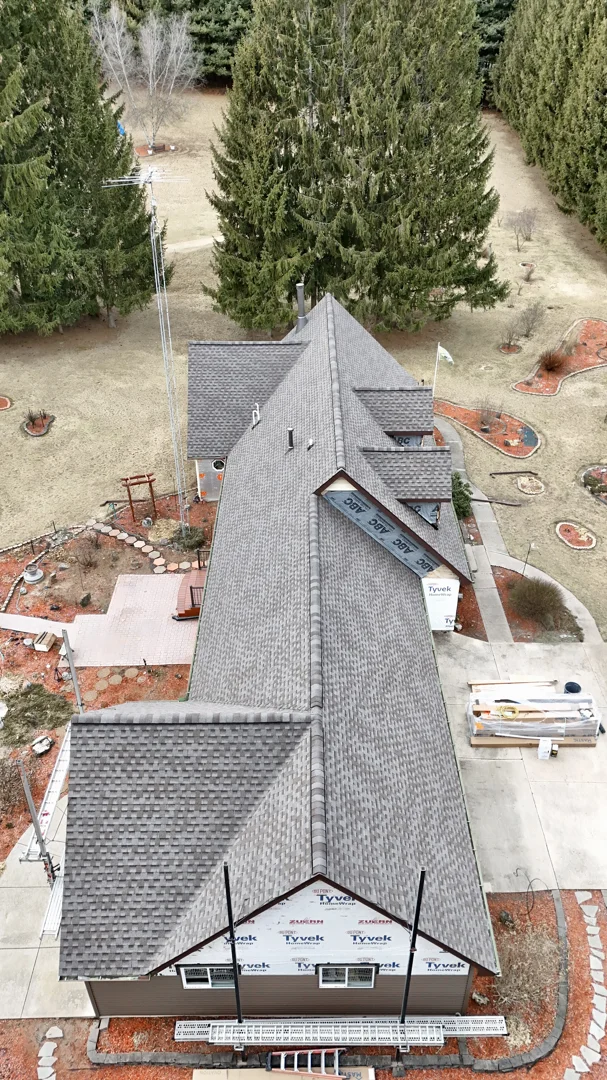
Roofing materials react differently to impact shock. Understanding material vulnerabilities helps property owners recognize when a professional restoration is required, as outlined in our guide on Hail Damage Roof 101.
Asphalt Shingles: Granule Loss, Bruising, and Fiberglass Exposure
Asphalt shingles are the most common roofing material across Southeastern Wisconsin, but they are vulnerable to direct hail impacts:
- Mineral Granule Loss: Ceramic granules shield the underlying asphalt from ultraviolet (UV) radiation. Hail impacts dislodge these granules, exposing the raw black asphalt substrate to accelerated solar drying, cracking, and water intrusion.
- Shingle Mat Bruising: When a hailstone strikes with force, it crushes the internal fiberglass mat without necessarily leaving a visible surface hole. If you press lightly on a circular impact point and it feels spongy or soft, the underlying structural reinforcement is fractured.
- Micro-Cracks and Tears: High-velocity impacts create radiating hairline fractures or semi-circular tears along the edges of the shingle tabs.
- Exposed Fiberglass: Large stones can punch completely through the asphalt layer, exposing the woven fiberglass substrate to direct rain and ice.
Metal, Tile, and Flat Roof Vulnerabilities
Other roofing and exterior substrates exhibit unique impact signatures:
- Metal Roofing & Soft Metals: While standing seam and corrugated metal roofs rarely puncture from small hail, impacts leave distinct depressions. Examining soft metal fixtures like aluminum ridge vents, box vents, and flashing reveals the true severity of a storm. For exterior cladding insights, see our breakdown on Aluminum Siding vs. Hail: Spotting Damage and Finding Solutions.
- Clay & Concrete Tile: Hailstones cause corners to chip, create star-shaped fracture patterns, or shatter entire tiles, exposing the underlying waterproof membrane.
- Commercial Flat Roofs: Built-up roofs (BUR), modified bitumen, and single-ply membranes (TPO/EPDM) suffer hidden punctures and fractured underlying insulation boards. Learn how to identify commercial issues in our guides on How to Check Your Flat Roof for Hail Damage After a Storm and When Ice Attacks: A Guide to TPO Roof Hail Damage and Repair.
Safe Post-Storm Assessment: How to Check for Roof Damage
Climbing onto a damaged or wet roof poses severe slip-and-fall hazards and can dislodge remaining shingle granules. Homeowners can track local storm paths using interactive hail tracking maps and evaluate the property safely from ground level.
Evaluating Storm Hail Damage from the Ground Safely

Grab a pair of binoculars and walk the perimeter of your property:
- Check Gutters and Downspouts: Inspect aluminum gutters and downspout pipes for fresh, clean dings and impact dents.
- Examine Shingle Runoff: Look at the discharge areas beneath your downspout elbows. Piles of accumulated mineral granules indicate severe shingle abrasion above.
- Inspect Siding and Fascia: Look for cracked vinyl siding panels, paint chips on cedar siding, or dented aluminum fascia wrap.
- Evaluate Collateral Fixtures: Check exterior light fixtures, wooden deck railings, window screens, and outdoor AC condenser coils for dented cooling fins.
- Inspect Parked Vehicles: Hail large enough to dent vehicle hoods and break auto glass has almost certainly compromised nearby roof shingles.
Checking Attic Spaces and Collateral Property Damage
After completing your exterior perimeter check, head inside to inspect the structural underside:
- Attic Inspection: Enter your attic with a high-powered flashlight. Look for damp or discolored insulation, dripping water, or water pooling on the vapor barrier.
- Roof Sheathing: Check plywood or OSB roof decking for dark water staining, localized swelling, or daylight penetrating through fastener penetrations and vents.
- Upper Ceilings and Drywall: Check second-story ceilings and wall corners for fresh yellow-brown water rings or peeling drywall tape.
Immediate Recovery Steps and Avoiding Storm Chaser Scams
The hours immediately following a severe weather front require rapid action to protect your home from moisture intrusion while avoiding high-pressure contractor fraud.
Emergency Mitigation: Tarping and Securing Property
Your insurance policy requires you to take reasonable steps to prevent secondary property loss. If hail has broken skylights, compromised vents, or punctured roofing membranes, execute immediate temporary mitigation:
- Place buckets beneath active indoor leaks.
- Secure heavy-duty polyethylene tarps over punctured exterior sections using wooden batten strips to prevent wind uplift.
- Cover broken vehicle and home windows with weather-resistant plastic sheeting.
- For emergency contractor support, reference our walkthrough on Emergency Roof Repair After a Storm: What to Do.
Spotting Storm Chaser Red Flags and Choosing Reputable Contractors
Following major weather events, out-of-state “storm chasers” flood affected neighborhoods. These transient operators often perform rushed, substandard repairs and disappear before warranty claims arise.
Watch for these primary red flags:
- Door-to-Door High-Pressure Sales: Demanding an immediate signature on a contract before conducting an assessment.
- Offering to Pay or Waive Your Deductible: This practice is illegal under state insurance laws and constitutes insurance fraud.
- Out-of-State License Plates and Unmarked Vans: Lack of a permanent local business address or regional phone number.
- Demanding Full Payment Upfront: Reputable contractors never ask for complete payment before materials arrive or work begins.
Always verify that your contractor is fully licensed, carries general liability and workers’ compensation coverage, and maintains deep roots in your local community.
Navigating Insurance Claims, Denials, and Repair Costs
Navigating an exterior property loss claim requires precise documentation, clear communication, and an understanding of policy deductibles, as outlined in The Ultimate Guide to Roof Repair, Insurance, and Claims.
Navigating Your Insurance Claim for Storm Hail Damage
To give your claim the best chance of full approval:
- Document the Date and Evidence: Note the exact date and time of the storm. Take dated, high-resolution photographs of hailstones next to a ruler, alongside photos of collateral damage to gutters, siding, and vehicles.
- Schedule a Professional Roof Assessment: Have a licensed local roofing contractor thoroughly evaluate the roof before opening an insurance claim to confirm functional damage exists. Read our advice on How to Spot Hail Damage and Get Your Insurance to Pay.
- File Promptly: Contact your insurance carrier to open the claim and receive your claim number.
- Conduct a Joint Adjuster Inspection: Arrange for your trusted roofing contractor to meet the insurance adjuster on-site. Your contractor will walk the roof with the adjuster to ensure bruised shingles, soft metal impacts, and broken accessories are documented in the initial scope of loss.
Why Claims Get Denied and How to Appeal Undervalued Settlements
Insurance companies may deny or underpay hail claims for several reasons:
- Attributing Loss to “Wear and Tear”: Adjusters may argue that shingle deterioration is due to normal aging rather than a sudden storm impact.
- Cosmetic Damage Exclusions: Some policies contain cosmetic endorsements excluding coverage for dented metal surfaces if they remain watertight.
- Missed Sub-Surface Bruising: Adjusters who only perform visual assessments from a ladder may overlook internal fiberglass fractures.
If your claim is unfairly denied or undervalued, you have the right to request a re-inspection with a different adjuster, hire an independent public adjuster, or invoke your policy’s formal appraisal clause to resolve scope and cost disputes.
Frequently Asked Questions About Hail Damage
What size hail will cause functional damage to an asphalt shingle roof?
Hail measuring 1.00 inch (quarter size) or greater is the recognized severe threshold capable of causing functional damage to asphalt shingles. However, smaller hail (0.75 inches) driven by wind speeds over 50 mph can crack aged or brittle shingles, dislodge protective mineral granules, and break adhesive seals along shingle tabs.
How long do I have to file a hail damage claim with my insurance company?
Most standard homeowners insurance policies require claims to be filed within one year (12 months) from the official date of loss, though some policies allow up to two years. It is critical to file promptly; waiting until a leak manifests months later can give insurers grounds to deny the claim due to homeowner neglect.
Can hail damage on a roof cause leaks months after the storm?
Yes. Hail impacts often create micro-fissures and crush the internal fiberglass mat without causing an immediate puncture. Over subsequent months, thermal expansion, contraction, UV radiation, and seasonal rain erode the weakened asphalt. This leads to delayed leaks, rotted plywood decking, and hidden attic mold long after the initial storm has passed.
Conclusion
Storm hail damage is an insidious threat that often goes unnoticed until water begins dripping through your ceiling. Taking swift, measured action—documenting collateral ground damage, performing safe attic checks, and arranging for a comprehensive roof evaluation—protects your home’s structural integrity and preserves your property value.
At Smith Roofing & Exteriors, our team brings experienced local craftsmanship, transparent pricing, and 24/7 emergency response to protect homes across Southeastern Wisconsin. If you suspect severe weather has impacted your property, explore our specialized solutions for Fort Atkinson Residential Storm Damage Roofing and schedule your comprehensive roof evaluation today.